
Preparing for your eye test
Dilated eye examinations in Reservoir: what to expect
Dilating drops widen your pupils so the optometrist can get a clearer view inside your eyes. A little planning makes the visit and the journey home easier.
This guide covers adult eye examinations. Ask Reservoir Spectacles whether dilation is likely at your appointment, particularly if you need to organise transport or time away from work.
Plan ahead
Three things to arrange before your visit.
A way home
Arrange a lift or another safe way home if dilation is planned. Do not rely on being able to drive straight after the appointment.
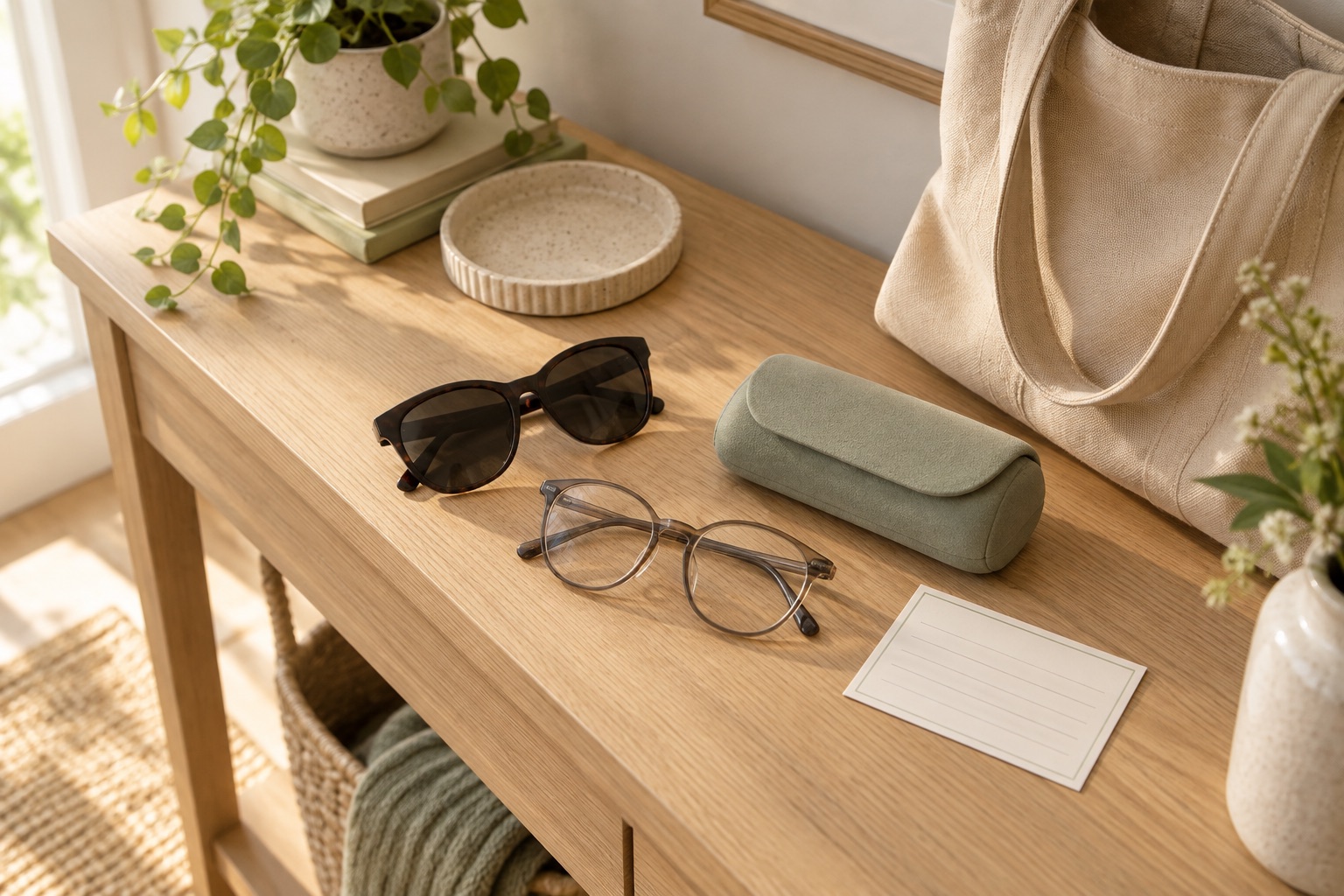
Sunglasses
Bring a pair for the journey home: bright daylight may feel uncomfortable while your pupils are enlarged.
A flexible afternoon
Reading and close work may be temporarily difficult. Avoid scheduling tasks that depend on clear vision immediately afterwards.
Bring your usual glasses, a current medicines list and any relevant eye reports. Tell the optometrist about previous reactions to eye drops, glaucoma or other eye conditions before drops are used.
Why drops may be useful
A wider view of the back of your eye.
A larger pupil helps the clinician examine the retina and optic nerve. Dilation may be recommended because of your symptoms, eye history or health risks; it is not automatically needed at every visit. The reason and suitable timing should be explained to you.
It can be part of assessing conditions such as diabetes-related eye changes or macular degeneration. Your comprehensive eye examination is tailored to your needs.
During the appointment
Drops, a short wait, then the examination.
The drops can sting briefly. You will usually wait while they take effect before the clinician examines your eyes using a light and lenses. Let them know if you feel uncomfortable or have questions.
Allow extra time when dilation is planned. Ask when booking how long to allow for your particular appointment; there is no single visit length that applies to everyone.
Check that you understand the findings, the follow-up plan and who to contact if you have a concern. Ask how long the effects of the particular drops used are expected to last.
After the examination
Temporary blur and light sensitivity are expected.
Your vision, especially at close range, may be blurred for several hours. The duration varies with the drops and the individual. Sunglasses can improve comfort outside, but they do not restore normal focusing or make it safe to drive.
Do not drive or operate machinery until the effects have worn off, your vision is back to normal and you have followed the clinician’s advice. A fixed number of hours is not a guarantee that your vision has recovered.
If the effects last longer than you were advised, contact the clinician for advice. Severe symptoms need urgent assessment as described below.
Serious reactions are uncommon. Seek urgent eye care for severe eye pain, a markedly red eye, worsening vision, or halos accompanied by pain, headache, nausea or vomiting after dilation. Do not dismiss these as the usual temporary blur.
If the practice is closed or cannot assess you promptly, go to an emergency department. Do not drive yourself with affected vision. For sudden major vision loss or a medical emergency, call 000. See our urgent eye care guidance.
Common questions
Planning around dilating drops.
Does every eye test need dilation?
No. Ask why it is recommended for you. If transport or another commitment makes it difficult, discuss that before the appointment. New or urgent symptoms should not be delayed simply to fit a routine booking.
Can I return to screen work?
Temporary near blur and light sensitivity may make screens uncomfortable. Plan flexibility and follow the advice given for your drops, especially if your work involves driving or machinery.
Is this the same as a child’s eye-drop test?
Some drops also relax focusing to help measure a child’s prescription. The purpose, drops and recovery advice can differ. See our separate children’s eye tests with drops guide.
Local eye care
Let us help you prepare.
Call Reservoir Spectacles before your visit if you are unsure about drops, transport or what to bring. We are at 2C Edwardes Street, Reservoir VIC 3073.
Further reading: Royal Victorian Eye and Ear Hospital appointment advice, National Eye Institute dilation guide and Moorfields guidance on dilating drops and warning symptoms. These general resources do not replace the instructions for your own examination.