
Children’s lazy-eye checks in Reservoir
Amblyopia (lazy eye): helping children develop clearer vision
Amblyopia is reduced vision that develops when the brain does not receive a clear, matching image from one or both eyes during childhood. The eye can look completely normal, and a child may not know that one eye sees less clearly.
Early detection matters because vision is still developing. At Reservoir Spectacles, a children’s eye examination can compare the eyes, check focusing and alignment, and identify whether glasses, monitoring or referral for further care is appropriate.
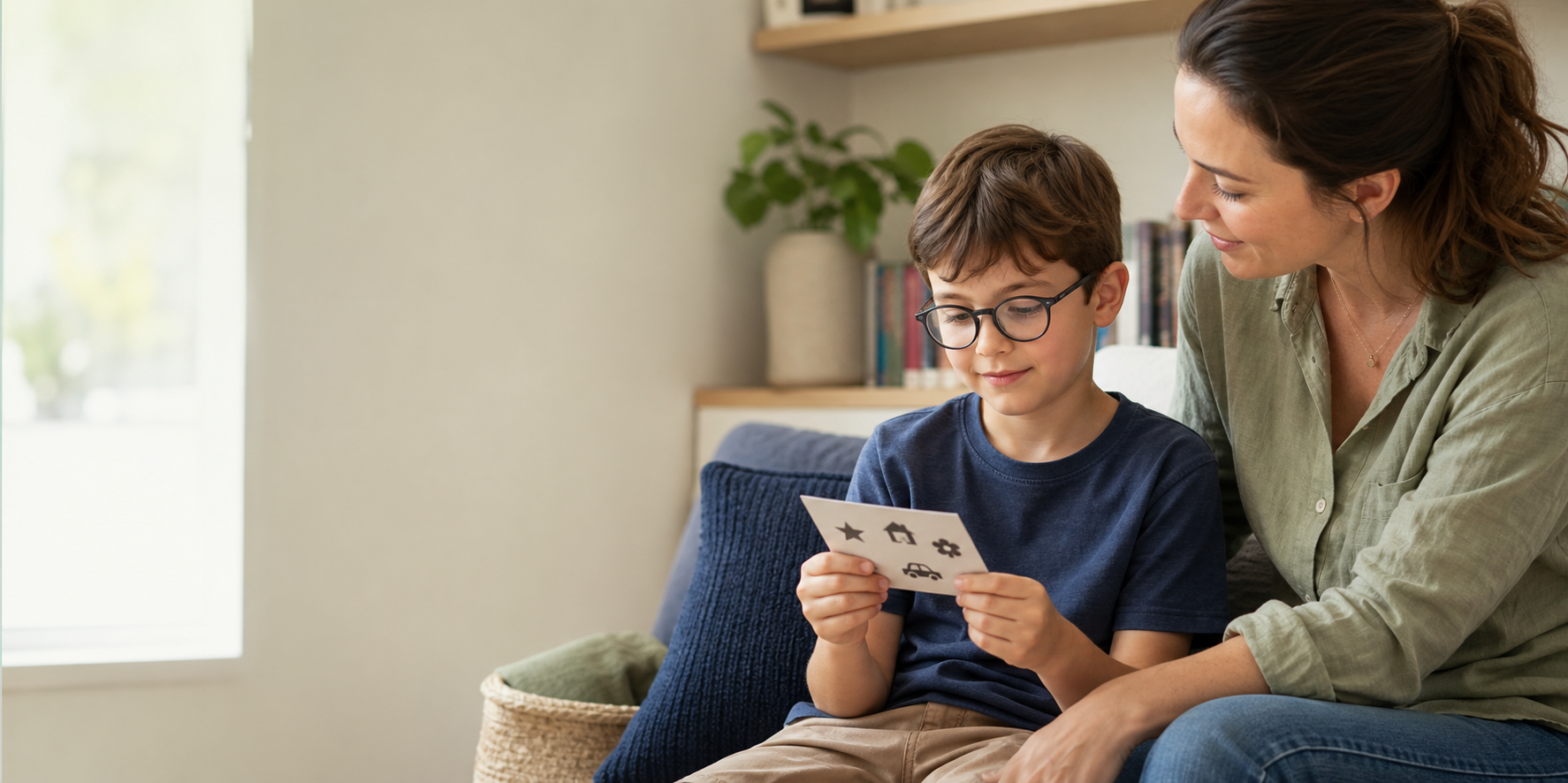
A vision-development condition
What is amblyopia?
Amblyopia is often called “lazy eye”, although the name can be misleading: the eye is not lazy and a child cannot fix it by trying harder. It develops when the brain receives a poorer image from one eye, or occasionally both eyes, during the years when vision is developing. The brain starts relying more on the clearer eye.
Glasses can correct the focusing error that contributes to amblyopia, but the affected eye may not immediately reach the same vision as the other eye. Management is individual and can involve glasses, patching, prescribed eye drops or other care under professional guidance.
The eye to cover, the number of hours and the review plan depend on the diagnosis. Incorrect patching can delay appropriate care.
Why the images differ
What can cause amblyopia?
Different prescriptions
One eye may be much more long-sighted, short-sighted or astigmatic than the other. The clearer eye can take over even when both eyes look straight.
An eye turn
With strabismus, one eye turns in, out, up or down. The brain may suppress the image from that eye to avoid confusion.
Something blocking vision
Less commonly, a drooping eyelid, childhood cataract or another eye condition can stop a clear image reaching the developing visual system.
Astigmatism is one possible focusing difference; read our astigmatism guide. Amblyopia is different from childhood myopia, although a child can have more than one condition.
Often there are no obvious clues
What might parents or teachers notice?
One eye turns or drifts
The turn may be constant or appear only when the child is tired, unwell or concentrating.
Closing or favouring one eye
A child may cover one eye, tilt their head, bump into things on one side or resist having the clearer eye covered.
Difficulty with detailed tasks
Some children avoid close work, sit very close, squint or lose interest quickly—but many children with amblyopia report no problem at all.
Because the stronger eye can compensate, behaviour and school performance cannot confirm or rule out amblyopia. Measuring each eye separately is essential.
Child-friendly and age appropriate
What may be checked at the appointment?
Testing is adapted to the child’s age, communication and confidence. They do not need to know the alphabet or describe a prescription perfectly.
Vision in each eye
Letters, matching symbols or pictures can be used to compare what each eye can see.
Focusing and prescription
Objective techniques help measure long-sightedness, short-sightedness and astigmatism, including when a child gives limited answers.
Eye alignment and health
The examination can assess how the eyes point and work together and check for an eye-health reason for reduced vision.
Learn more about our children’s eye tests in Reservoir and the Victorian Glasses for Kids program.
The plan depends on the cause
How is amblyopia managed?
The first step is to give each eye the clearest image possible and address the reason one eye is receiving poorer visual input. For some children, wearing the prescribed glasses consistently produces a meaningful improvement.
If vision remains unequal, patching the stronger eye or prescribed drops that temporarily blur it may be recommended to encourage use of the amblyopic eye. Some children need assessment or shared care with an ophthalmologist or orthoptist, particularly when an eye turn, cataract, eyelid problem or another eye condition is present.
Follow-up matters. Vision, prescription, alignment and adherence are reviewed so the plan can be adjusted safely. Families should use patching or drops exactly as directed rather than changing the schedule themselves.
Practical support at home
Helping a child with glasses or patching
Make glasses comfortable
A secure, well-adjusted frame helps the lenses sit correctly. Let us know if glasses slip, pinch or are difficult to keep on.
Follow the written plan
Use the prescribed wearing or patching schedule and bring the glasses, patching information and any questions to review visits.
Choose an engaging activity
If patching has been prescribed, drawing, puzzles, reading or another enjoyable detailed task can make the time easier—without changing the advised duration.
When not to wait for a routine visit
Arrange prompt assessment for a new eye change
Contact an optometrist or GP promptly if a child develops a new or sudden eye turn, a white pupil or unusual white reflection in photographs, sudden reduced vision, persistent double vision, a drooping eyelid that blocks the pupil, significant eye pain, marked redness, injury or chemical exposure.
For a severe injury, chemical exposure, sudden major vision loss or neurological symptoms, seek emergency care. See our urgent eye care guidance or call Reservoir Spectacles on (03) 9460 8017 if you are unsure how quickly a child should be seen.
Frequently asked questions
Can a child have amblyopia even if both eyes look straight?
Yes. A large prescription difference between the eyes can cause amblyopia without a visible eye turn.
Will my child tell me if one eye is blurry?
Not always. The clearer eye can do most of the work, and a child may assume their vision is normal. This is why each eye is tested separately.
Are amblyopia and strabismus the same?
No. Amblyopia is reduced visual development; strabismus is an eye-alignment condition. An eye turn can cause amblyopia, but either can occur without the other.
Are glasses always enough?
Sometimes glasses produce substantial improvement. Other children also need professionally directed patching, prescribed drops or specialist care. The plan depends on the cause and response.
Can I wait until school screening?
If you have noticed a concern, arrange an eye examination rather than waiting. Victorian screening is valuable, but it does not replace assessment of a specific symptom or parental concern.
A clear comparison between the eyes
Book a children’s eye test in Reservoir
If you have noticed an eye turn, one eye seems weaker or your child has not had each eye checked separately, arrange an appointment. Bring current glasses and any reports from school screening, a GP or another eye-care professional.
Reservoir Spectacles is at 2C Edwardes Street, Reservoir VIC 3073.