Eye tests in Reservoir
Comprehensive eye tests in Reservoir.
A thorough eye examination looks beyond whether you can read the smallest line. It considers how clearly and comfortably you see, your eye health, your daily visual needs and any changes you have noticed.
At Reservoir Spectacles, 2C Edwardes Street, Reservoir VIC 3073, we explain what we are checking and discuss the results in plain English. Meet our team or explore our eye care and eyewear services.
Why eye tests matter
Clearer vision and a check of your eye health.
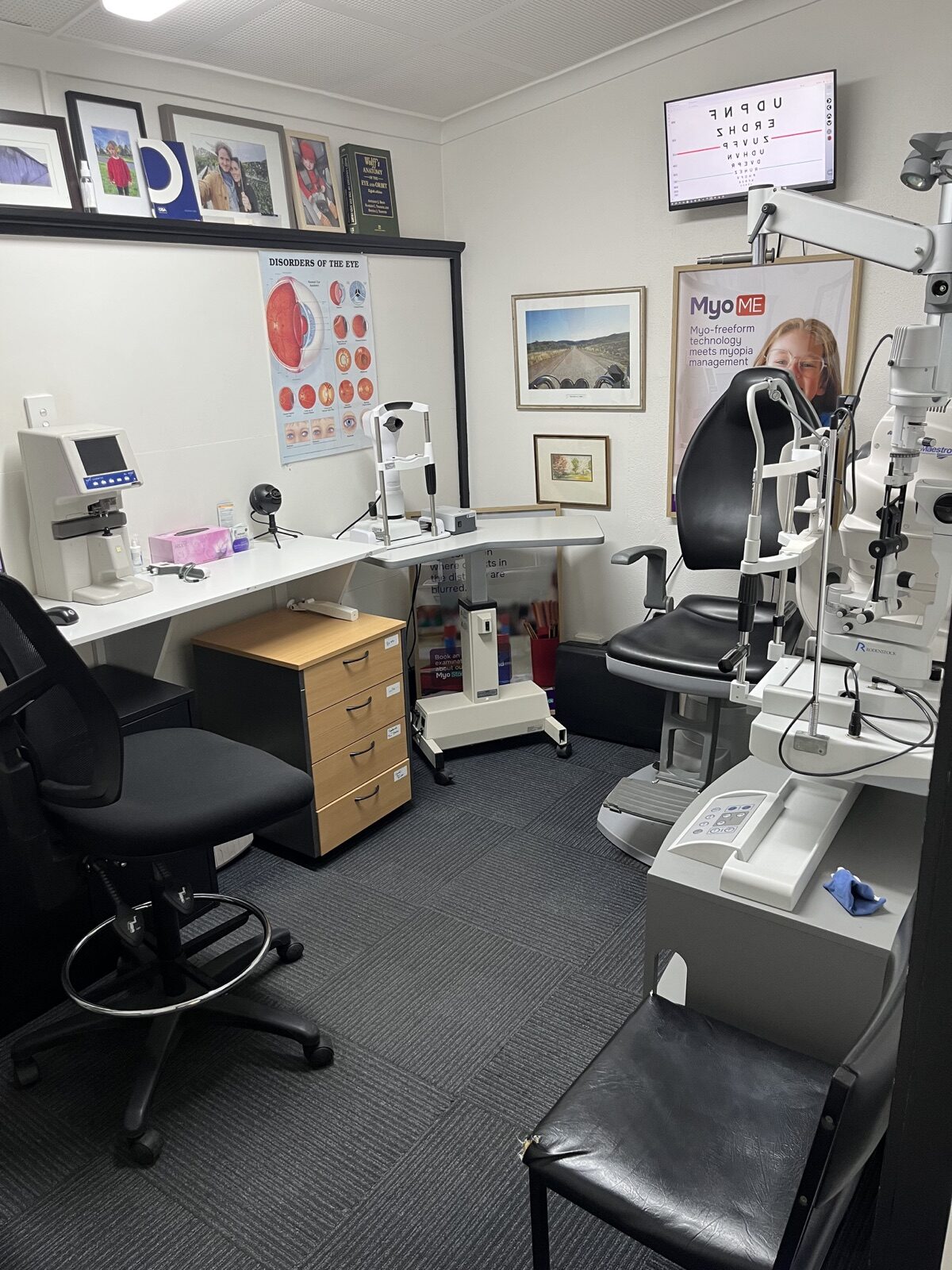
Regular eye tests can detect changes in your prescription and may identify signs of eye problems before you notice symptoms. The tests used during an appointment depend on your age, health, family history, symptoms and clinical needs—not everyone needs every test.
If you live with diabetes, regular retinal assessment can be important even when your vision seems unchanged. Read about diabetes eye checks in Reservoir.
If you have a family history of glaucoma or have been asked to monitor your eye pressure or optic nerves, read about our glaucoma eye checks in Reservoir.
Vision and prescription
We check how well you see at relevant distances and whether glasses or an updated prescription may help.
Eye health
We examine the visible structures of the eyes and assess internal eye health using tests appropriate to you.
Comfort and function
Where relevant, we consider focusing, eye coordination and the visual demands of work, study, driving and screens.
What to expect
Your examination is shaped around you.
Healthdirect notes that an optometrist will ask about your general and family health before selecting appropriate eye tests. A comprehensive appointment may include:
- A discussion of your vision, symptoms, eye history, general health, medicines and family history.
- Measurement of your distance and near vision.
- A prescription assessment for short-sightedness in adults, long-sightedness, astigmatism or age-related near focusing changes.
- Checks of eye movements, coordination, pupils or focusing where relevant.
- Examination of the front and back of the eyes.
- Eye-pressure measurement and additional tests when clinically indicated.
If a finding needs monitoring, treatment or specialist care, we explain why and discuss an appropriate plan or referral.
When to book
You do not need to wait for your vision to become obviously blurry.
Vision has changed
Blur at distance or near, trouble driving, glare, headaches, eye strain or difficulty changing focus.
Your glasses are not working well
You are removing them for tasks, moving closer, changing posture or avoiding activities that used to feel comfortable.
Health or family risk
Your health, medicines or family history may affect how often an eye-health check is appropriate.
Routine care
Eye problems can develop without obvious early symptoms, so regular checks remain useful even when your vision seems stable.
Children’s vision
Children do not always recognise or report vision difficulties. See our dedicated children’s eye-test information.
New or concerning symptoms
Some changes should be assessed promptly rather than waiting for a routine appointment.
Before your visit
A few details can make the appointment more useful.
- Bring the glasses and contact lenses you currently use.
- Note when symptoms occur and which tasks or distances are difficult.
- Bring a current medicines list and relevant medical or family-eye history.
- Think about your usual work, reading, screen and driving demands.
- Bring any referral, previous report or specialist correspondence you want us to consider.
If dilating drops are planned, arrange transport and bring sunglasses. Our adult dilated eye examination guide explains what to expect before and after your visit.
After the examination
Clear advice, without pressure.
We discuss the findings and whether your current prescription is still suitable. If new glasses could help, we explain the lens options that make sense for your visual needs. If no change is needed, we say so. You can also read about our approach to prescription lenses.
Urgent symptoms
Some eye problems should not wait for a routine eye test.
Seek urgent assessment for sudden vision changes, significant eye pain, a red painful eye, injury, marked light sensitivity or new flashes and floaters. Use our urgent eye care information, or read our specific flashes and floaters guidance. If the practice is closed or timely assessment is unavailable, go to an emergency department. Do not wait for a routine booking. Call triple zero (000) for a medical emergency.
Related information
Explore care for different visual needs.
Children’s Vision
Eye tests and visual care for children at school, in sport and through development.
Read about children’s eye tests →Cataract Eye Checks
Common cataract signs, what an eye examination can assess and when referral may help.
Read about cataract eye checks →Childhood Myopia
Signs of short-sightedness, progression and management options for children.
Read about childhood myopia →Macular Degeneration Eye Checks
Common AMD signs, monitoring and when a central-vision change needs prompt care.
Read about macular degeneration →Screen and Near-Work Comfort
Information about anti-fatigue lenses and other factors in digital eye strain.
Explore anti-fatigue lenses →Contact Reservoir Spectacles
Ask a question or plan your visit to the practice.
Contact us →Digital Eye Strain
Practical guidance for screen-related tiredness, focusing discomfort and visual habits.
Read about digital eye strain →Reading and Near Focus
How age-related focusing changes can affect reading and other close tasks.
Read about presbyopia →Amblyopia
Why comparing the eyes matters when one eye has not developed the same level of vision.
Read about amblyopia →Colour Vision
Colour-vision testing and practical guidance for children and adults.
Read about colour vision →Blood Spot on the Eye
A guide to a typical painless surface bleed and symptoms that need faster care.
Read the blood-spot guide →Eye Twitching
Common triggers, sensible self-care and when a persistent twitch needs assessment.
Read about eye twitching →Patient information sources
Page information reviewed 29 September 2026. These sources support the general guidance; your examination and follow-up plan depend on your individual needs.
Australian eye-care guidance.
Why people book
Symptoms an eye test can investigate.
Learn more about headaches linked with reading or screens and gradual or sudden blurred vision. Sudden vision loss or other warning signs need urgent care.
Common questions
Before you book an eye test.
Do I need a referral?
No. You can book directly with an optometrist. Bring any existing referral or eye report so it can inform your care.
Does everyone need every test?
No. Your optometrist selects tests according to your symptoms, age, health and eye history, then explains any further assessment that is needed.
How often should I return?
Ask your optometrist for a review interval suited to your age and risks. New symptoms should be assessed when they occur, rather than waiting for your next routine review.
Appointments
Book a comprehensive eye test in Reservoir.
Choose an online appointment, or call Reservoir Spectacles if you are unsure what type of visit you need.
Prefer an eye test in German, Cantonese or Arabic?
John speaks German, Flora speaks Cantonese and Rose speaks Arabic. See who to book with for an eye test in your preferred language.