
Medical & urgent eye care
Prompt care when something doesn’t feel right.
Sudden, painful or unusual eye symptoms deserve timely attention.
Reservoir Spectacles assesses many urgent eye concerns, including red eyes, flashes and floaters, eye injuries, infections and sudden changes in vision. Call the practice so we can help you choose the right next step.
Emergency warning signs
Some eye problems should go straight to hospital.
Do not wait for an optometry appointment if you have a serious eye injury or sudden severe symptoms.
This includes sudden major vision loss, a penetrating eye injury, severe eye trauma, a chemical splash, or vision changes with possible stroke symptoms such as facial droop, arm weakness or difficulty speaking.
Chemical in the eye
Start rinsing immediately with clean, gently running water for at least 20 minutes. Do not delay rinsing while seeking help, and arrange urgent medical assessment.
Embedded or penetrating object
Do not press, rub or try to remove an object embedded in the eye. Protect the eye from further contact and go directly to emergency.
Call the practice promptly
Eye symptoms we commonly assess.
If symptoms are new, worsening, painful or affecting your vision, please call rather than relying on an online booking.
Red or painful eyes
Persistent redness, pain, discharge or marked irritation can have several causes and may need treatment.
Flashes, floaters or a shadow
New flashes or floaters, especially with blurred vision, a curtain or a shadow in your sight, need urgent assessment.
Sudden blurred or distorted vision
A sudden change in one or both eyes should not be ignored, even when there is no pain.
Foreign bodies and minor injuries
Grit, small particles, scratches and minor knocks can be uncomfortable and may damage the eye’s surface.
Light sensitivity
New or significant sensitivity to light, particularly with pain or redness, can be a sign of inflammation.
Contact-lens problems
Remove your lenses and call promptly if you develop pain, marked redness, discharge, light sensitivity or sudden blurred vision.
Your appointment
Careful examination and a clear plan.
We will listen to what has changed, examine the eyes and explain what we find in plain language.
Clinical assessment
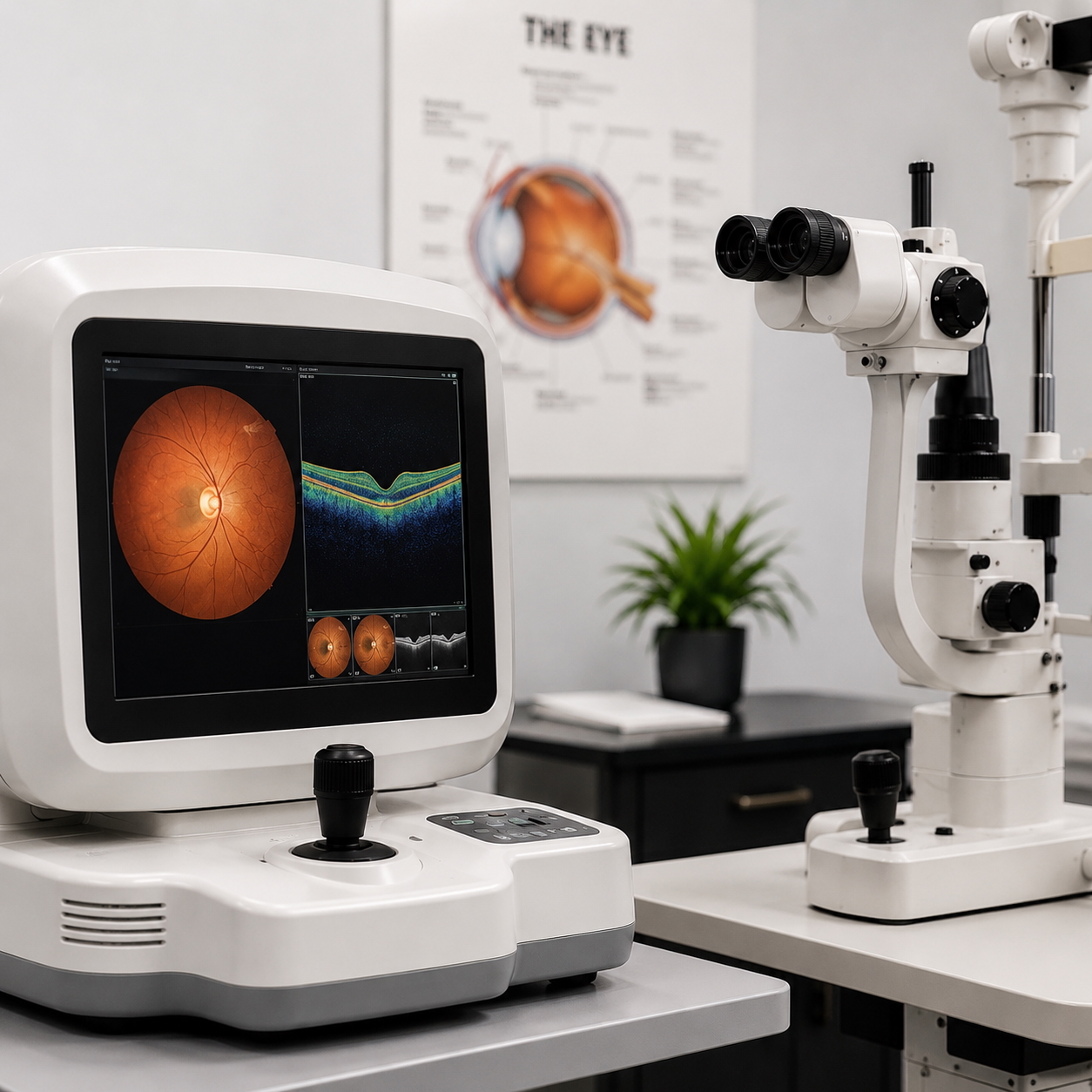
The examination is tailored to your symptoms and may include vision, eye-pressure and microscope checks.
Diagnostic imaging
Retinal photography and OCT scanning may be used when detailed assessment of the retina or optic nerve is helpful.
Next steps
Depending on the findings, we may recommend treatment, monitoring, GP care or referral to an ophthalmologist or hospital.
Call us on (03) 9460 8017 and describe the symptoms. If the practice is closed and the problem feels serious or vision is suddenly affected, seek urgent medical care.
Urgent eye concerns
Call us before booking online.
Speaking with the practice helps us understand the symptoms and advise whether you need an urgent appointment or emergency care.