Childhood myopia management in Reservoir
Childhood myopia in Reservoir: clear vision and a plan for growth.
Myopia—also called short-sightedness—usually begins during childhood and can change as a child grows. Children with myopia generally see close objects more clearly than things in the distance. They may not realise their vision is different, so changes can be easy to miss without an eye examination.
At Reservoir Spectacles, we assess children’s vision and eye health, explain whether myopia is present or progressing, and discuss an individual management plan with the family.
What is myopia?
Myopia is a focusing condition in which distant objects appear blurred. It commonly begins in the pre-teen years, although it can start earlier or later. A child’s prescription may increase during periods of growth.
Glasses or contact lenses can provide clear vision. Myopia management goes further by considering the child’s age, prescription changes, family history, visual environment, eye health and evidence-based options intended to slow progression.
Signs of short-sightedness in children
A child may not complain about blurred vision. Possible signs include:
- squinting to see the board or distant signs
- sitting close to the television or moving closer in the classroom
- difficulty recognising people or objects at a distance
- headaches or eye strain
- losing interest in activities that rely on clear distance vision
- a glasses prescription that becomes more short-sighted over time
These signs can have more than one cause. A comprehensive eye examination is needed to determine what is happening.
Why does progression matter?
Myopia can continue to progress through childhood and sometimes into early adulthood. Higher levels of myopia are associated with a greater lifetime risk of eye-health problems, including retinal complications, glaucoma and myopic macular degeneration.
No treatment can guarantee that progression will stop. The aim of myopia management is to provide clear vision, monitor change and—when appropriate—use an evidence-based approach that may slow progression.
What may be included in a myopia assessment?
The examination is tailored to the child and may include:
Vision and prescription
Measuring how clearly each eye sees and determining the prescription. Eye drops may sometimes be recommended to relax focusing and obtain a more accurate measurement. Read what to expect from a cycloplegic eye test.
Eye coordination and focusing
Assessing how the eyes work together and focus during schoolwork, reading and other near tasks.
Eye health
Examining the front and back of the eyes and considering whether additional testing is clinically appropriate.
Progress over time
Comparing current findings with previous prescriptions and examinations. Reliable measurements over time help guide whether active management should be discussed.
Learn more about our children’s eye tests and comprehensive eye examinations.
Myopia-management options
The appropriate plan depends on the child’s age, prescription, rate of change, eye health, practical needs and ability to use a treatment safely. Evidence-based approaches can include specially designed spectacle lenses, soft contact lenses, orthokeratology and prescription eye drops.
These options have different benefits, limitations, costs and care requirements. Not every option is suitable or available for every child. We will explain which approaches can be considered at Reservoir Spectacles and when referral or co-management with another clinician is appropriate.
Orthokeratology
Reservoir Spectacles provides Ortho-K for suitable children, teenagers and adults. Custom rigid contact lenses are worn overnight to temporarily reshape the cornea, providing clear daytime vision after removal. For some children with progressing myopia, Ortho-K can form part of an evidence-based management plan.
Overnight contact-lens wear is not risk-free. Careful cleaning, correct handling and regular reviews are essential. Read more about Ortho-K in Reservoir.
Healthy visual habits at home and school
Regular outdoor time may reduce the risk of myopia developing in children. It is also sensible to break up long periods of close work, use comfortable working distances and ensure good lighting.
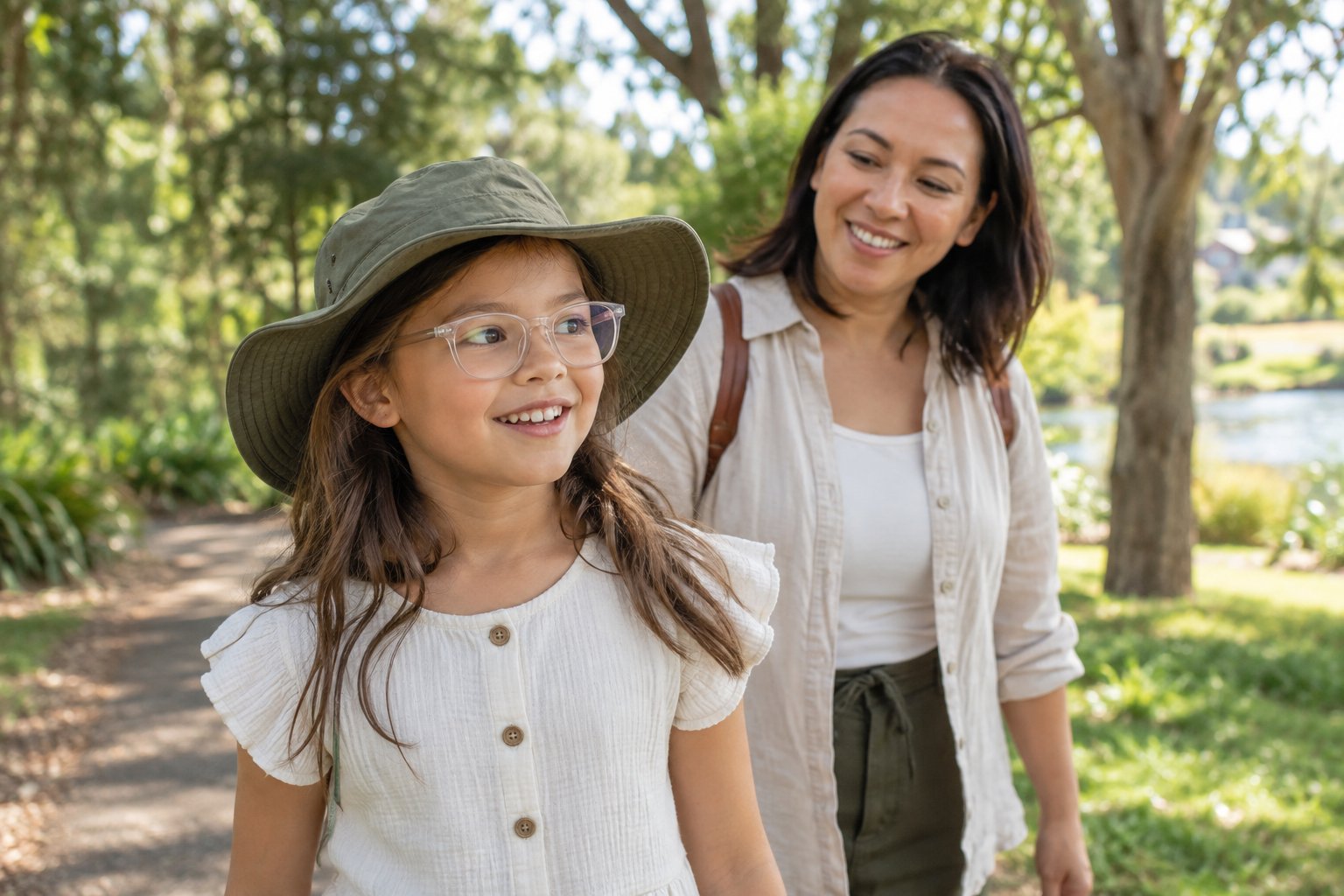
Aim to make time outdoors part of the daily routine. Outdoor time has stronger evidence for reducing the chance of myopia starting than for slowing established myopia; it is not a cure. Combine it with sun protection appropriate to the UV level: shade, a broad-brimmed hat, protective clothing, sunscreen and suitable sunglasses.
For reading and screens, encourage a comfortable working distance and regular changes of activity. Keep using prescribed glasses and attend reviews. We can help turn this advice into a practical plan for your child.
Follow-up and monitoring
Review timing is individual. Children whose prescription is changing or who have started a myopia-management treatment may need more frequent checks than a child whose vision is stable.
Bring previous glasses and any available prescription records to the appointment. They can help show how quickly vision has changed. Tell us about any treatment already in use, difficulties with lenses or drops, and what the child notices at school. Before leaving, make sure you know the next review date and who to contact with a concern.
When symptoms need prompt care
Myopia usually changes gradually. Sudden vision loss, a new shower of flashes or floaters, a curtain or shadow in the vision, severe eye pain, significant injury or chemical exposure is not a routine myopia change.
For sudden or concerning eye symptoms, call the practice promptly on (03) 9460 8017. If we are closed or prompt assessment is unavailable, seek an available eye-care professional or emergency department rather than waiting for an online booking. See our urgent eye care guidance. Sudden major vision loss, severe trauma, penetrating injury, chemical exposure or possible stroke symptoms should be directed to an emergency department or 000.
Frequently asked questions
Can ordinary glasses stop myopia from progressing?
Standard single-vision glasses correct blurred distance vision but are not designed to slow eye growth. Depending on the child, other evidence-based approaches may be discussed.
Is Ortho-K suitable for every child?
No. Suitability depends on prescription, corneal shape, eye health, maturity, hygiene and the family’s ability to manage overnight lenses and follow-up care.
Can outdoor time cure myopia?
No. Outdoor time may help reduce the risk of myopia developing, but it does not reverse established myopia or replace clear-vision correction and professional care.
How often should a child with myopia be checked?
There is no single schedule for every child. Review timing depends on age, prescription, rate of change and the management approach. Your optometrist will recommend an appropriate interval.
Book a childhood-myopia assessment in Reservoir
If your child is squinting at distant objects, struggling to see the board or becoming more short-sighted, arrange an eye examination. We will explain the findings clearly and discuss practical next steps without assuming that one option suits every family.
Reservoir Spectacles is at 2C Edwardes Street, Reservoir VIC 3073.
Looking for your own distance-vision advice? See our separate short-sightedness in adults guide.
Further reading: Healthdirect on myopia, the WSPOS myopia consensus statement hosted by RCH (PDF), and RCH sun-safety advice.
Ask a non-urgent question on WhatsApp or check parking and plan your visit.