Children’s eye tests in Reservoir
Calm, thorough eye care for growing eyes.
Children’s eye tests can be completed well before a child can read letters, and children do not always know when the way they see is different.
Children’s eye tests look beyond reading the bottom line. We assess how clearly each eye sees, how the eyes focus and work together, and the health of the eyes — using age-appropriate tests that feel relaxed and manageable.
For an overview of eye testing at the practice, read about our comprehensive eye tests in Reservoir.
Worth a closer look
Small clues can say a lot.
Children can have a vision problem without complaining about blurred sight.
Consider booking an eye test if you notice any of these signs, if a teacher has raised a concern, or if you simply want reassurance before your child starts school.
Reading and schoolwork
Losing their place, using a finger to track, avoiding reading, holding books very close or tiring quickly with near work.
Eyes and comfort
Frequent eye rubbing, blinking, headaches, tired eyes, closing one eye or turning the head to look at something.
What you can see
One eye turning in or out, unusual sensitivity to light, squinting, or sitting very close to screens and television.
Their appointment, at their pace
What happens during a children’s eye test?
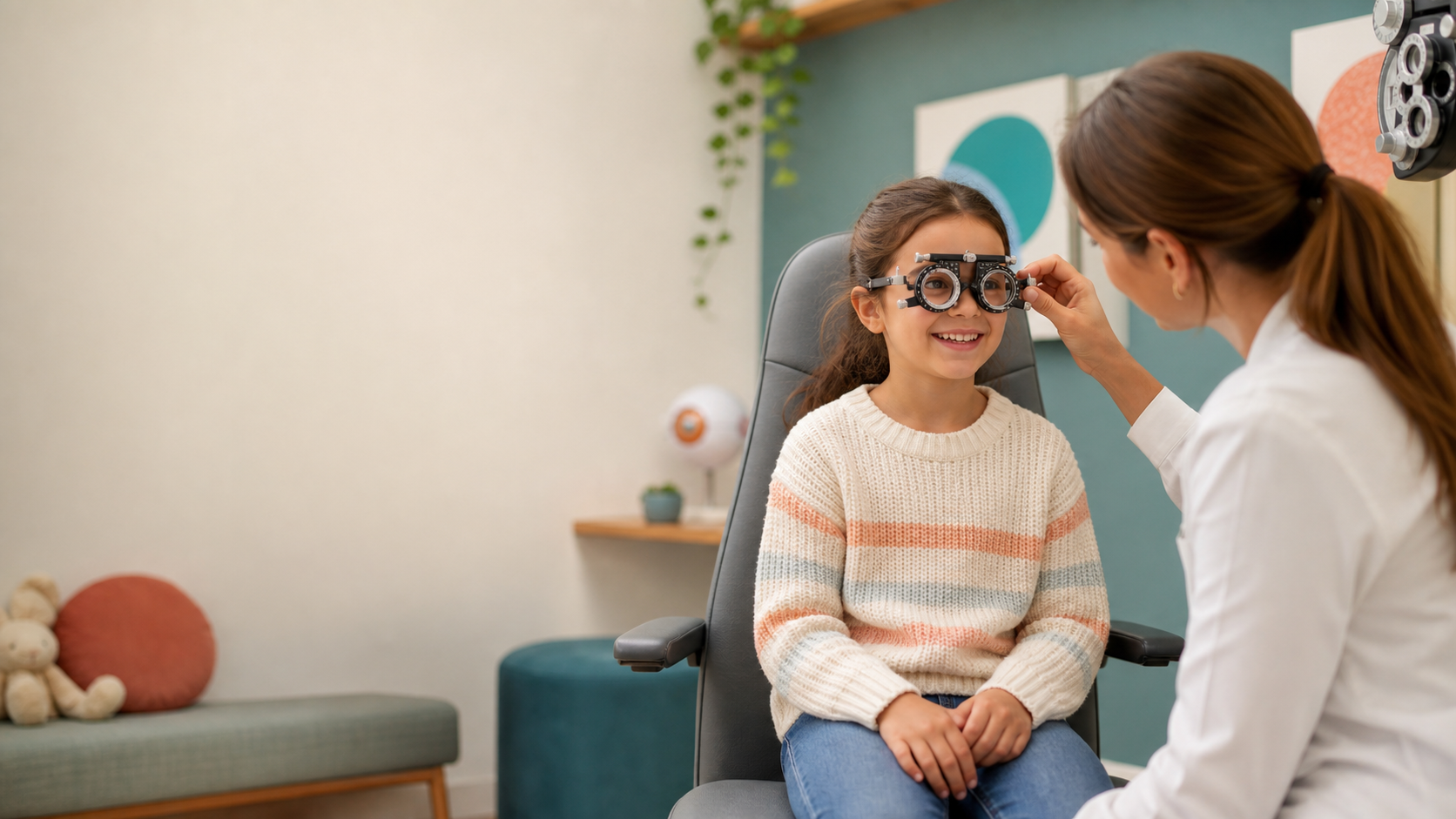
Children can be tested well before they are able to read an eye chart.
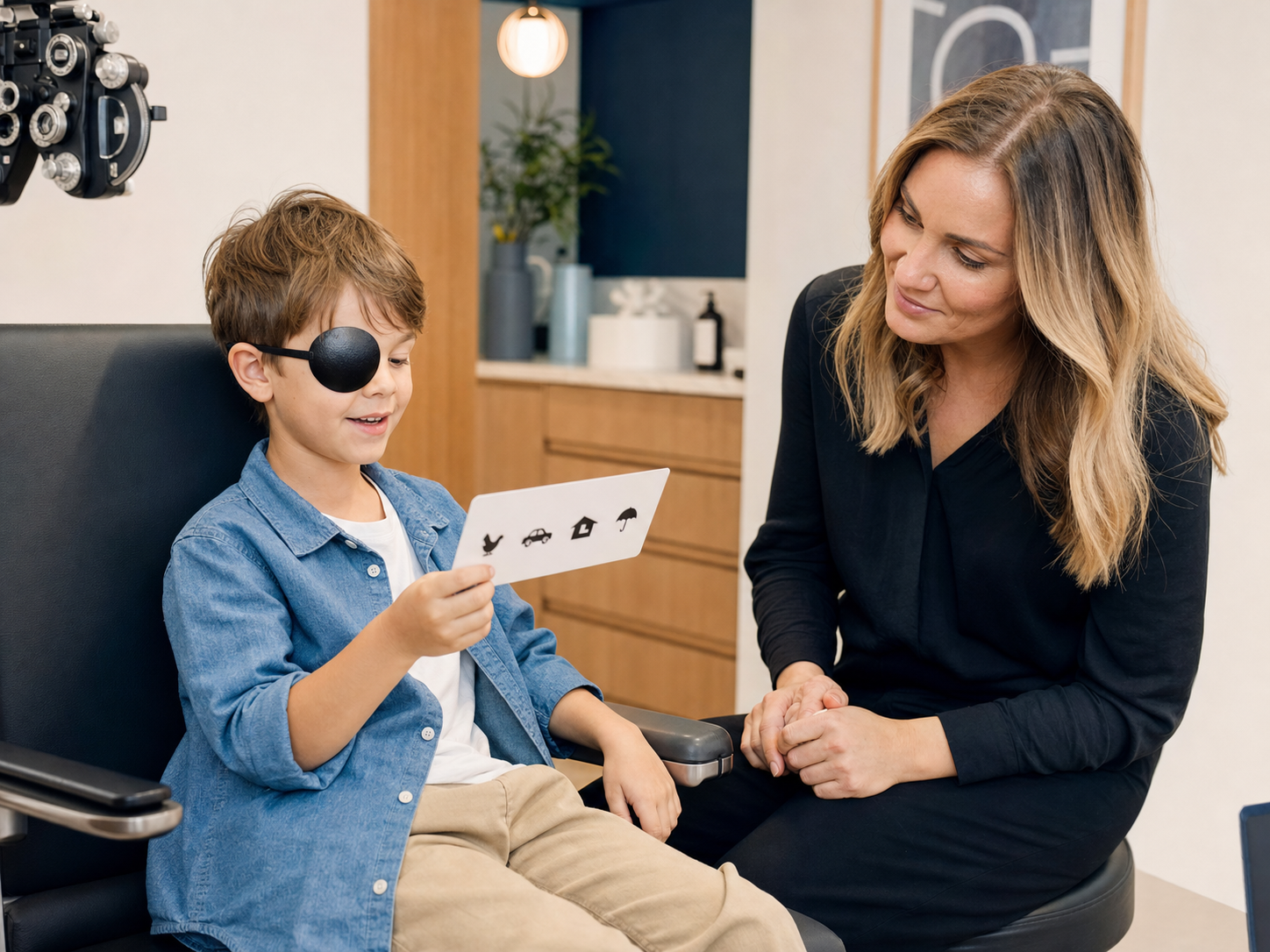
We start by talking with you and your child about what has been noticed at home, at school or during sport. Pictures, matching, lights, lenses and simple games allow us to gather useful information without relying on reading.
The examination is adapted to your child’s age, communication and confidence. There is time for breaks, questions and encouragement, and we explain the findings in plain language before discussing any next steps.
A comprehensive assessment
More than checking whether the letters are clear.
Good vision involves several skills working together comfortably.
Distance and near vision
How clearly each eye sees at the distances used for the classroom, books, screens, play and sport.
Eye coordination
How the two eyes align and work together, including screening for turned eyes and binocular-vision problems.
Focusing
How comfortably and accurately the eyes focus, and how they adjust between distant and close tasks.
Eye movements
How the eyes follow a moving target and shift accurately between objects or places on a page.
Prescription
Checking for long-sightedness (hyperopia), short-sightedness and astigmatism, including measurements that do not require verbal answers.
Eye health
A careful examination of the eyes, with referral for further assessment when a medical eye concern is identified.
Children’s vision experience
Evidence-based care, with time to explain what we find.
John has a particular interest in children’s vision and has completed the Australian College of Optometry’s Advanced Certificate in Children’s Vision.
This additional training covers areas including binocular vision, amblyopia, strabismus, nystagmus, myopia control, learning-related vision concerns and paediatric eye disease.
Reservoir Spectacles also participates in the Victorian Government’s Glasses for Kids program. This children’s vision page covers our broader paediatric optometry care. Families looking specifically for subsidised glasses can read our Glasses for Kids information.
Children’s vision FAQs
Common questions before an eye test.
When should my child have their first eye test?
Children can be examined before they can read or name letters. An eye test before starting school provides a useful baseline. Book sooner if you notice a turned eye, unusual visual behaviour, persistent symptoms or have concerns about your child’s vision or eye health.
What if my child is shy or will not sit still?
That is completely okay. The examination can be adapted with breaks, pictures, simple tasks and different ways of measuring vision. Useful information can often be gathered without a child needing to give long verbal answers.
Does a children’s eye test hurt?
No. Most tests use lights, pictures, lenses and simple activities. We explain each step in child-friendly language and take the appointment at a comfortable pace.
Will my child need eye drops?
Many children do not need drops during a routine appointment. In some situations, drops may be recommended to obtain a more accurate measurement or assess the eyes fully. If that is appropriate, we will explain why and discuss it with you first.
For preparation and recovery advice, read our parent guide to eye tests with dilating drops.
Does Medicare cover children’s eye tests?
Many clinically necessary eye examinations attract a Medicare benefit for eligible patients. Please contact the practice if you would like to check what applies to your child’s appointment.
Related children’s vision guides
Common concerns parents ask about.
Headaches and near work
Headaches around reading or screens can have several causes. See when a children’s eye test may help with headaches.
Watery or irritated eyes
Learn about common causes of watery eyes and the symptoms that need prompt care.
Lazy eye
Read about amblyopia in children, including signs, testing and why early assessment matters.
Colour vision
Our guide to colour vision deficiency and testing explains testing and practical classroom support.
Sunglasses and UV
See our guide to children’s sunglasses and UV eye protection, including fit and everyday use.
Children’s vision in Reservoir
Give your child time, reassurance and a thorough eye test.
Book online with Reservoir Spectacles, or call the practice if you are unsure what type of appointment your child needs.